

How Brand Perception Impacts Revenue
DATE: JUNE 1ST, 2026 TIME: 8 MINUTE READ SUBJECT: BUSINESS DEVELOPMENT
The foundation is brand perception.
Because if your brand isn’t communicating trust, clarity, and value, your sales materials won’t be able to carry that weight on their own. You can have the perfect offer, strong marketing campaigns, and a talented sales team, but if customers don’t perceive your business as credible, aligned, or worth the investment, hesitation happens before the conversations can even begin.
What is Brand Perception?
Picture this: You’re searching online for a company to clean your house monthly. After a few minutes of research, you narrow it down to two businesses. On paper, they offer almost the exact same services. Both have websites, both are active on social media, and both claim to provide high-quality work.
BUT ONE COMPANY IMMEDIATELY STANDS OUT.
Their brand feels polished and professional. Their website clearly explains their services, showcases before-and-after transformations, and makes it easy to understand what working with them would feel like. Their photography feels authentic, their messaging is confident, and everything about the experience communicates trust and consistency.
THE OTHER COMPANY TELLS A DIFFERENT STORY.
The logo is blurry on their website. Their social media is full of generic stock photography or AI generated menus, logos, and imagery. Their service descriptions are vague, pricing feels disconnected, and there’s little proof of the quality they promise. Whether intentional or not, the brand feels disorganized, inconsistent, and difficult to trust.
Which company will you choose? The answer is pretty obvious, and that’s brand perception in action.
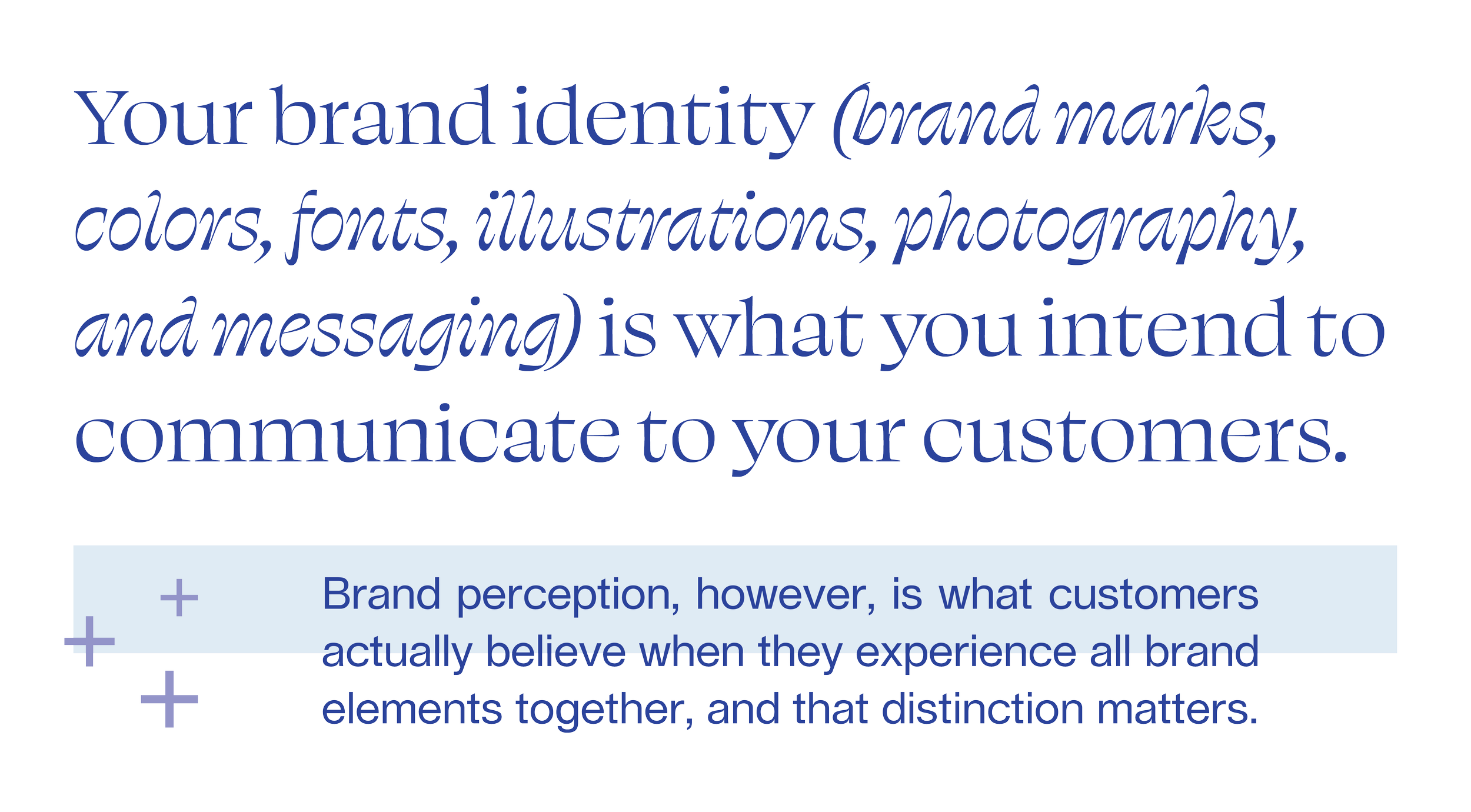
Customers don’t interact with your intentions, they interact with what’s in front of them. Every touchpoint shapes how they perceive your business, whether it’s accurate or not. Strong brand perception ensures your audience is hearing, seeing, and believing what you already know to be true about your business: your work is valuable, trustworthy, and worthy of investment.
How Brand Perception Directly Impacts Your Revenue
PERCEPTION INFLUENCES BUYING DECISIONS.
People like to believe they make purchasing decisions logically, but in reality, emotion almost always comes first. Logic helps justify the decision after they’ve made their choice emotionally, and that’s just the way it is.
BEFORE SOMEONE HIRES YOUR BUSINESS, BOOKS YOUR SERVICE, OR PURCHASES PRODUCT, THEY SUBCONSCIOUSLY ASK THEMSELVES A SERIES OF QUESTIONS:
Can I trust this business?
Does this business feel established/legitimate?
Does this feel worth the investment?
Does this brand align with my lifestyle, values, and expectations?
Think about luxury skincare brands, boutique coffee shops, wellness studios, and high-end architecture firms. Many of them aren’t selling something radically different from their competitors.
What sets them apart is the feeling their brand creates.
Their visuals are intentional, their messaging is clear, and the experience feels cohesive from beginning to end. Customers walk away feeling confident in their quality before ever making a purchase.
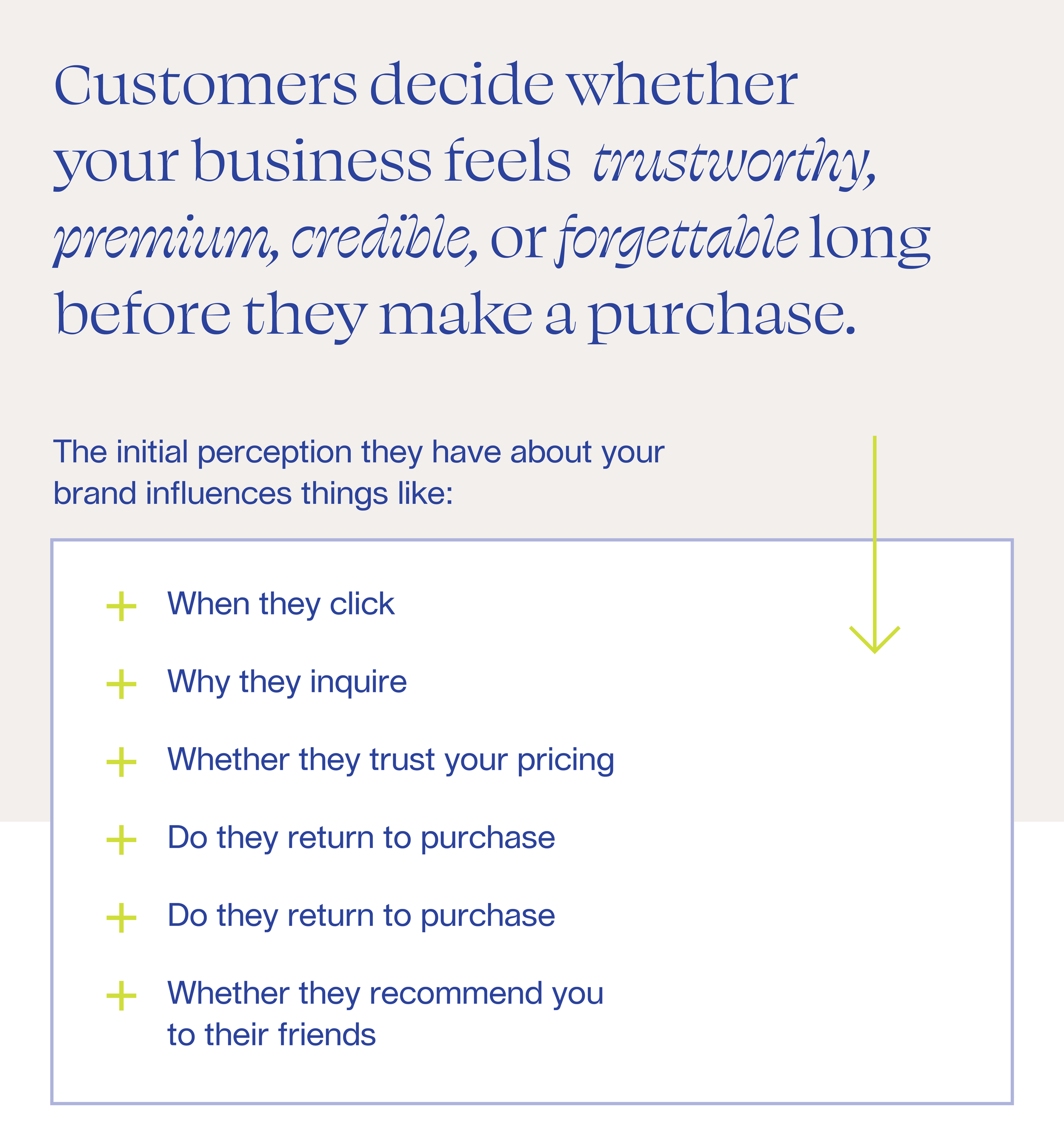
When customers trust a brand, they spend way less time questioning the decisions and more time moving towards making a purchase. They are more likely to inquire, more willing to engage online, and far less resistant through your sales process.
STRONG BRANDS COMMAND HIGHER PRICES.
One of the clearest ways brand perception impacts revenue is through pricing power.
When a brand feels premium, strategic, and trustworthy, customers become significantly less price-sensitive. They are not just evaluating the product or service itself. They are evaluating the experience, the professionalism, the consistency, and the confidence the brand creates.
This is why customers willingly pay more for brands like Apple, Nike, or boutique businesses with strong positioning. In many cases, there are less expensive alternatives that offer similar functionality or services. However, those brands have built a perception of quality, reliability, and identity that customers are willing to invest in.
The same principle applies to small businesses.
A company with polished branding, cohesive messaging, strong photography, and a seamless customer experience will almost always be perceived as more valuable than a competitor with inconsistent visuals and unclear positioning, even if the quality of work is similar.
PERCEPTION AFFECTS CUSTOMER RENTENTION.
Brand perception does not stop mattering after the first purchase. In many ways, it becomes even more important over time.
Customers stay loyal to brands they feel emotionally connected to. When people consistently have positive experiences with a business, trust deepens and familiarity grows. That emotional connection is what turns one-time buyers into repeat customers and long-term advocates.
Consistency plays a major role in that process.
When a brand feels cohesive across every touchpoint, from social media and packaging to customer communication and service delivery, customers know what to expect. That predictability creates comfort, and comfort builds loyalty.
The brands people remember most are rarely the ones with the loudest marketing. They are the ones that create experiences that feel thoughtful, aligned, and intentional from beginning to end.
At Maker + Made, we believe branding should create authentic, lasting relationships between businesses and their audiences. A strong brand is not just about attracting attention. It is about creating a connection people want to return to again and again.

Poor perception quietly costs your company money
NOT EVERY REVENUE PROBLEM IS OBVIOUS.
Sometimes businesses are offering incredible products or services, but their branding fails to communicate the quality behind what they do. The result is a perception gap between the value they provide and the way customers experience the brand.
That gap can quietly cost businesses significant revenue over time.
Weak or inconsistent branding often leads to lower conversion rates, fewer referrals, higher customer acquisition costs, and difficulty raising prices. Customers hesitate because they are unsure what to trust, and hesitation almost always slows growth.
In some cases, businesses spend thousands trying to improve marketing performance or increase sales without realizing the issue started much earlier in the customer journey.
Sometimes businesses do not have a product problem. They have a perception problem.
If your brand is not clearly communicating professionalism, trust, and value, customers may never fully recognize the quality of what you offer, no matter how strong your work actually is.
How to Improve Your Brand’s Perception
The good news is that brand perception is not permanent. It can be refined, strengthened, and intentionally shaped over time. The key is approaching your brand with strategy instead of treating it like a collection of disconnected visuals or marketing tasks.
Improving brand perception starts with understanding how your business is currently being experienced by your audience.
AUDIT YOUR BRAND EXPERIENCE.
One of the most effective things you can do is step back and evaluate your brand from the perspective of a customer.
Look closely at every touchpoint someone interacts with before making a purchase decision. Your website, social media presence, packaging, messaging, inquiry process, and overall customer journey should all feel connected and aligned.
ASK YOURSELF QUESTIONS LIKE:
Does our website clearly communicate our value?
Does our social media reflect the quality of our work?
Does our messaging sound confident and consistent?
Does the customer experience feel intentional from beginning to end?
Many businesses unknowingly create friction because different parts of their brand are telling different stories. Their website may feel elevated, while their social media feels inconsistent. Their visuals may feel polished, but their messaging lacks clarity. Customers notice those disconnects, even if they cannot immediately explain why something feels “off.”
Strong brand perception happens when every part of the experience reinforces the same message.
FOCUS ON CONSISTENCY.
Consistency is one of the most overlooked parts of branding, but it is also one of the most important.
When customers repeatedly encounter the same tone, quality, visuals, and experience across every platform, familiarity begins to form. That familiarity creates trust.
Brands that feel inconsistent often create uncertainty. If visuals shift constantly, messaging feels unclear, or the customer experience changes from one interaction to the next, people begin questioning the professionalism and reliability of the business itself.
Consistency does not mean your brand has to feel repetitive or rigid. It simply means your audience should have a clear sense of who you are every time they interact with your business.
The strongest brands are recognizable because they feel cohesive at every touchpoint.
INVEST IN STRATEGIC BRANDING.
One of the biggest mindset shifts businesses can make is understanding that branding is not decoration. It is not just a logo, a color palette, or a “nice-looking” Instagram feed.
Branding is a business growth tool.
Strong branding shapes perception, builds trust, increases perceived value, and creates emotional connection with your audience. It influences how customers experience your business long before a sale happens and continues shaping loyalty long after the purchase is complete.
When businesses invest strategically in branding, they are investing in how people understand, remember, and value their company.
At Maker + Made, we approach branding holistically by combining strategy, messaging, visuals, and digital experiences to create cohesive brands that connect with audiences in meaningful ways. Because the goal is never just to make a business look better. The goal is to create a brand experience that supports long-term growth, trust, and conversion.
