
How Packaging Design Impacts Your Brand’s Perception
DATE: FEBRUARY 3RD 2026
TIME: 5 MINUTE READ
SUBJECT: PACKAGING
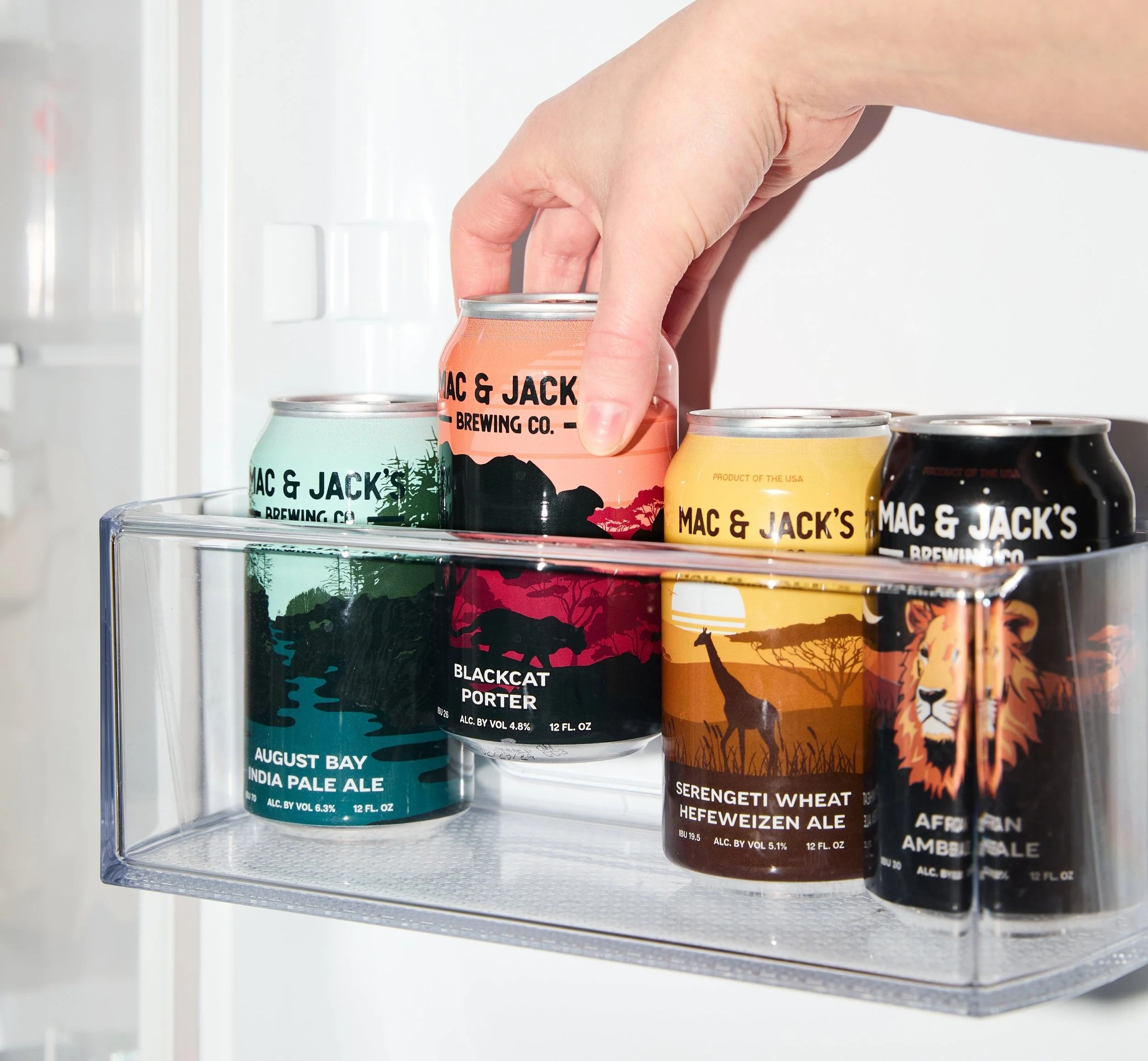
Packaging isn’t just decoration, it’s strategy.
For premium and luxury brands, packaging is so much more than a finishing touch. It's one of the most consequential brand decisions your business will make.
Long before a product is opened, used, or recommended, consumers are forming opinions on the physical appearance, the way it feels in their hand, and the information presented. Whether lined up on store shelves or displayed digitally online, people form immediate impressions about quality, credibility, and value. Packaging sets expectations instantly, often before performance ever enters the equation.
This is why packaging strategy matters so deeply when developing your brand. It's not about trend alignment or what's "cool" right now, it's about translating your brand positioning into something tangible, intuitive, and unmistakably intentional.
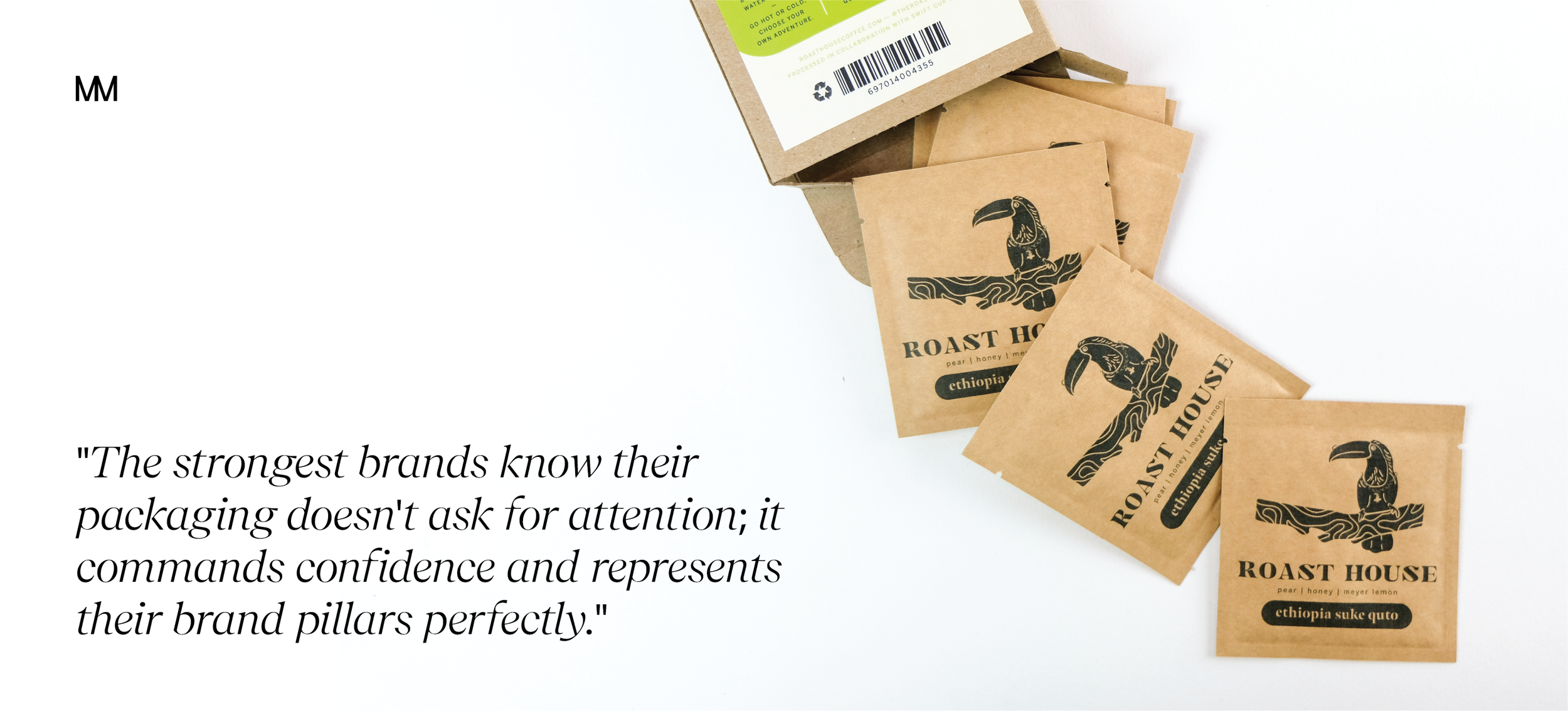
The strongest brands know their packaging doesn't ask for attention; it commands confidence and represents their brand pillars perfectly.
The Psychology Behind Packaging Design
Strategic packaging works because it aligns with how people actually make decisions. Before logic has time to intervene, the brain is already interpreting signals.
Color establishes emotional tone and category positioning before a single word is read. Muted palettes often signal restraint and refinement, while higher-contrast or saturated colors suggest accessibility, energy, or mass appeal. For premium brands, color is rarely about standing out at all costs, it's more about communicating confidence, intention, and a clear understanding of context.
Spacing and proportion are among the most overlooked signals in packaging design, yet they're some of the most powerful. Generous spacing makes information easier to scan and absorb. When a package isn't fighting for every millimeter of surface area, it signals confidence. The brand doesn't need to shout because it knows its value. Cramped, overcrowded packaging often reads as either discount-oriented or uncertain about what actually matters. Brands that use space intentionally make it easier for customers to quickly understand what they're looking at and why it's worth their attention.
Information hierarchy is about guiding the eye to what matters most, in the right sequence. When a package clearly prioritizes product name, key benefit, and supporting details in that order, it feels intuitive. When everything competes for attention at once like oversized claims, multiple callouts, cluttered messaging it reads as desperation or confusion about what the product actually does. Good hierarchy doesn't require customers to work for information. It presents the essentials first, then rewards closer inspection with thoughtful details. The result is packaging that feels both credible and easy to navigate, even at a glance.
How Packaging Shapes Brand Perception
Your packaging answers questions about your brand before a customer consciously asks them. It happens in seconds: someone sees your product and their brain immediately begins categorizing it based on visual and tactile cues.
Here's what's actually happening: The brain processes design elements; materials, finishes, color relationships, typography weight and matches them against existing mental frameworks for quality and value. A glass bottle with minimal labeling triggers different associations than a plastic container with bold graphics. Embossed text feels different than a sticker. These aren't subjective preferences; they're learned patterns that consumers use to make quick assessments.
Before a customer reads a word, packaging has already answered critical questions:
Is this brand premium or mass-market?
Is it artisanal, clinical, or luxury?
Does it feel intentional or opportunistic?
Can I trust what's inside?
The answers come from consistency.
When your packaging system is cohesive across products, contexts, and channels — whether on a shelf, in product photography, or shared on social media — it reinforces the same message repeatedly.
That repetition builds recognition, and recognition builds credibility. Inconsistent packaging, on the other hand, fractures those signals and makes your brand harder to remember or trust.
This is why packaging isn't just about individual products looking good. It's about creating a visual language that performs the same way every time someone encounters your brand.

Packaging as a Differentiator in Competitive Markets
In crowded categories, packaging can be what tips the scale in your favor. When products share similar price points, ingredients, or functions, the package becomes the deciding factor.
Consider the unboxing experience, which is a moment that extends far beyond the transaction. Premium packaging transforms a simple purchase into an event worth documenting and sharing. This isn't vanity; it's strategic brand amplification. When customers feel that opening your product is special, they naturally want to share that experience, turning your packaging into earned media.
The materials you choose matter just as much as the design itself. Sustainable materials signal forward-thinking values. Textured finishes invite touch and suggest craftsmanship. Magnetic closures or custom inserts demonstrate attention to detail that extends beyond what's immediately visible. These aren't just nice-to-haves, they're trust signals that communicate you care about the entire experience.
The Cost of Getting It Wrong
Here's what happens when packaging doesn't align with brand positioning: your product gets categorized incorrectly in the consumer's mind.
The disconnect creates friction that no amount of marketing can fully overcome. Misaligned packaging also creates internal challenges. It becomes harder to justify pricing, difficult to maintain consistent brand standards across product lines, and nearly impossible to build the kind of brand loyalty that turns customers into advocates.
The reality? You only get one chance to make a first impression, and in retail and e-commerce, that first impression is almost always your packaging.
Building a Packaging System That Scales
As your brand grows, your packaging needs to grow with it, and not just in volume, but in versatility. A well-designed packaging system anticipates future product launches, seasonal variations, and limited editions while maintaining unmistakable brand recognition.
Start by establishing non-negotiables: the elements that must remain consistent across every touchpoint. This might include specific color usage, logo placement, typography hierarchy, or material quality. These anchors allow flexibility in other areas without sacrificing brand cohesion.
Pro-tip: Create a packaging playbook that documents your design system, material specifications, supplier relationships, and brand standards. This becomes invaluable as your team grows and ensures everyone is working from the same strategic foundation.
Think modularly. Can certain elements be swapped or customized while maintaining the core system? Can your packaging accommodate different product sizes without looking like completely different brands? The strongest packaging systems feel unified yet flexible, allowing for creative expression within clear parameters.
When to Invest in Professional Packaging Design
If you're currently using templated packaging or something you designed yourself in the early days, here are signs it's time to invest professionally:
Your product quality has evolved beyond what your packaging suggests
You're expanding into retail and need shelf presence
Competitors with similar offerings are winning on visual appeal alone
Your pricing doesn't match the perceived value your packaging communicates
You're struggling to create a cohesive look across multiple products
Customer feedback mentions presentation or unboxing experience
Professional packaging design is more than just an expense, it's a strategic investment in how your brand is perceived, remembered, and shared. The right packaging can elevate your entire brand, justify premium pricing, and create customer experiences that drive organic word-of-mouth.
Ready to make packaging work as hard as your product does?
At Maker + Made, we specialize in packaging design that doesn't just look beautiful, but performs strategically across every customer touchpoint. From material selection to structural design to visual identity, we'll help you create packaging that commands the shelf, photographs perfectly online, and turns customers into brand advocates.
Let's talk about what your packaging could be saying about your brand. Reach out for a consultation and let's build something unforgettable together.