
Your Logo Isn’t Your Brand: What a Complete Identity Actually Does for Your Business
When most business owners think about the term “branding”, they think about a logo. And that makes sense. Your logo is one of the most visible parts of your business. It appears at the top of your website, on your signage, packaging, business cards, and social media profiles.
But your logo is only one part of your “brand”.
For a new business, a simple logo may really be all you need to get started. But as your business grows, your logo can’t carry you through everything that’s expected of a true brand. You need something that can work across more platforms, connect with a more established audience, support your new products and services, and hold your own next to larger competitors.
Eventually, many business owners reach a point where a logo isn’t necessarily the problem, but the brand around it feels unfinished because it was never developed to begin with. The website looks one way, social media looks another. Packaging was designed at different times by different people. Nothing feels “wrong”, but nothing quite works together, either.
That’s where a complete brand identity becomes valuable. A flexible system designed to help your brand look, sound, and feel consistent wherever people encounter it.
Why A Logo Alone Can’t Carry a Growing Business
A logo can identify your business, but it cannot communicate everything your business stands for.
It cannot fully explain your personality, clarify your positioning, guide your photography, shape your messaging, or help your team decide what a new marketing piece should look like. It also cannot solve every layout problem that comes with growth.
Your primary logo may look great across the top of your website, but what happens when you need a tiny social media icon? Will it still be readable on a product label? Does it work embroidered on a shirt, printed in one color, placed on an event banner, or tucked into the corner of a mobile screen?
Without a larger identity system, businesses are forced to make those decisions one project at a time.
A new color gets added because the original palette feels limited. Someone chooses a different font because they cannot access the usual one. Social media starts developing its own look. The packaging no longer matches the website. Sales materials feel like they belong to a completely different company.
Each choice may seem small, but together they shape how people experience the brand.
A complete identity gives all of those pieces a shared foundation. The logo still matters, but it no longer has to do all the work by itself.
The Strategy Behind a Strong Brand Identity
Before choosing fonts, colors, or logo variations, you need to understand what the brand is trying to communicate.
Who are you trying to reach? What matters to those people? What makes your business different? What should someone understand, feel, or remember after interacting with you?
Brand strategy creates clarity around those questions.
Depending on the project, that may include defining your audience, clarifying your position in the market, looking closely at competitors, identifying your personality, and determining which messages need to come through most clearly.
That groundwork gives the visual identity a reason to look the way it does.
A community-focused business that wants to feel warm and approachable should not look the same as a company built around precision, innovation, or exclusivity. Both can be beautiful, but they need to communicate very different things.
Without strategy, branding conversations tend to revolve around personal taste. Decisions become based on favorite colors, trending fonts, or what someone happened to save on Pinterest.
Those preferences can be helpful, but they should not be the entire foundation of the brand. The goal is not simply to create something attractive. It is to build an identity that supports the company’s goals, connects with the right audience, and makes sense for where the business is headed.
What a Complete Brand Identity Includes
Every business needs something slightly different, but most complete brand identities include a flexible mix of visual and verbal tools.
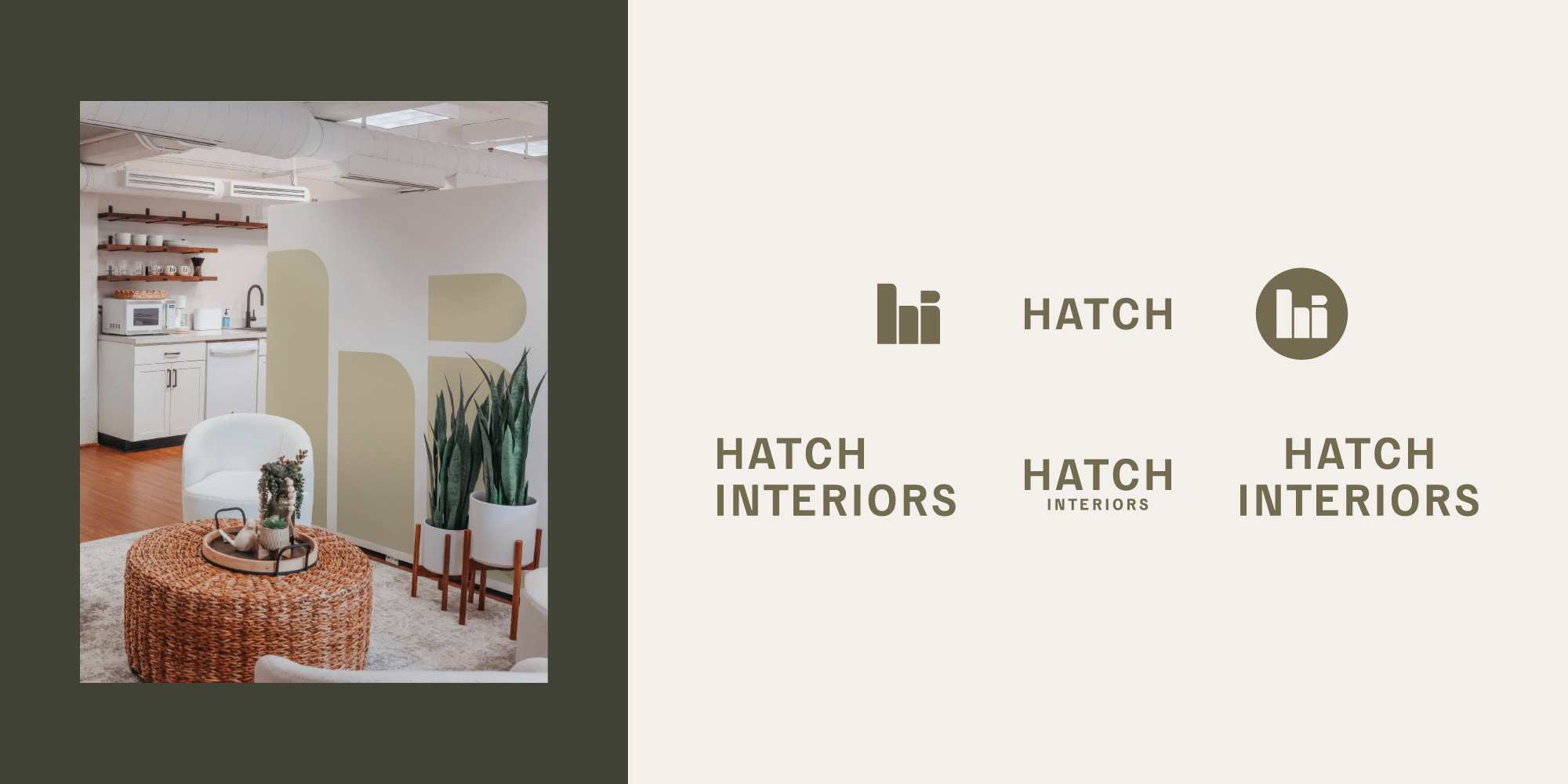
A FLEXIBLE LOGO SYSTEM
A professional identity usually includes more than one logo file.
You may have a primary logo for larger applications, an alternate layout for narrow spaces, a simplified mark for small placements, and an icon or monogram for social media and digital use. You may also need stacked, horizontal, one-color, full-color, and reversed versions.
These variations are not just extra files for the sake of having options. They make the brand easier to use.
Instead of squeezing one complicated logo into every possible space, you have versions that were intentionally designed for different applications. Each one feels connected to the others, but it serves a specific purpose.
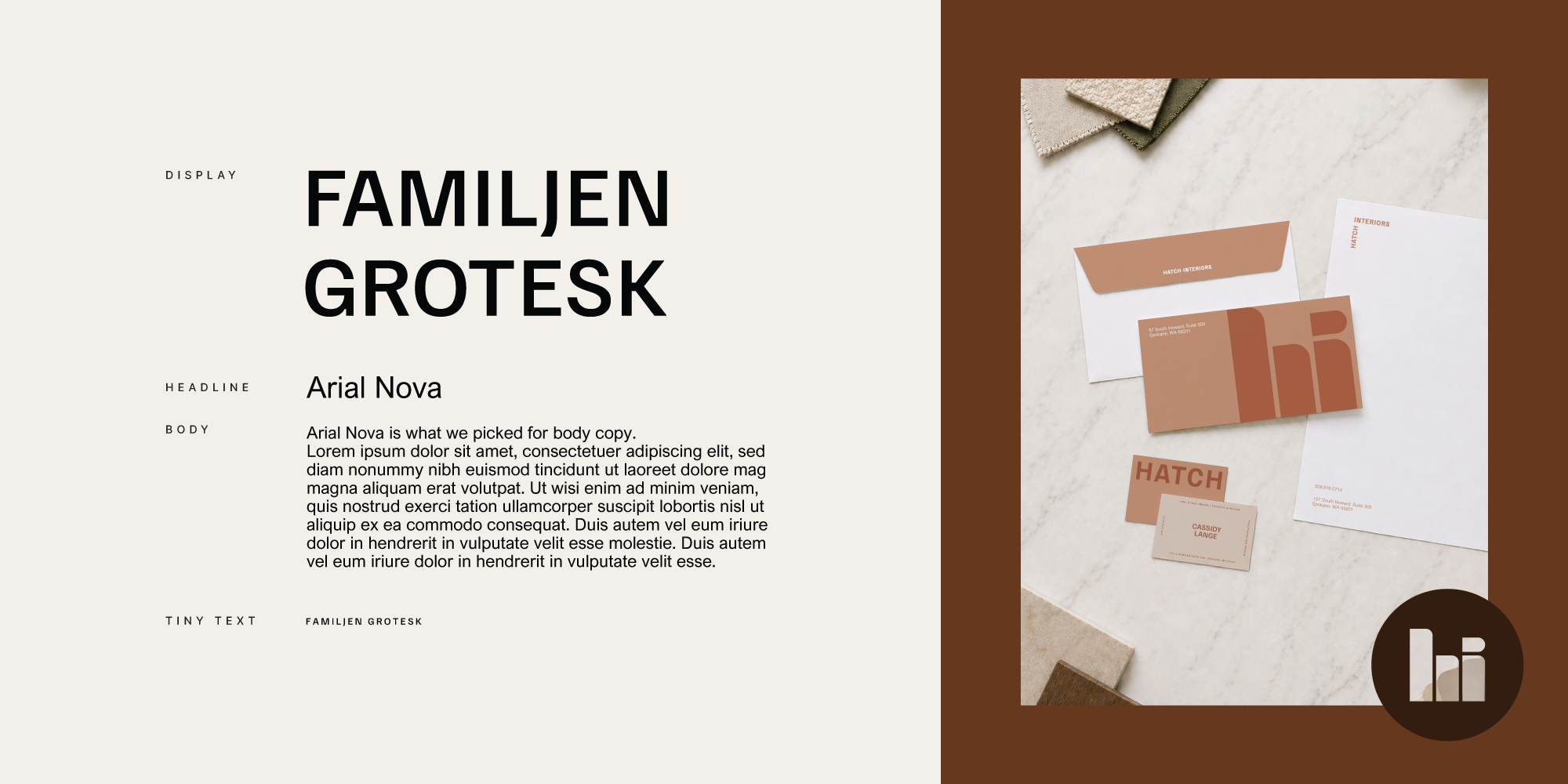
TYPOGRAPHY
Typography has a huge influence on how a brand feels, even though it is often overlooked.
The right font system can make a company feel established, playful, editorial, modern, technical, approachable, refined, or bold before someone has even processed the words.
A complete typography system typically includes fonts for headlines, body copy, supporting information, and occasional accent use. It should also provide some direction around how those fonts are paired, sized, spaced, and applied.
That consistency matters across websites, proposals, packaging, presentations, social media, email campaigns, and printed materials. It also makes life much easier for employees, contractors, and outside partners who need to create something on behalf of the brand.
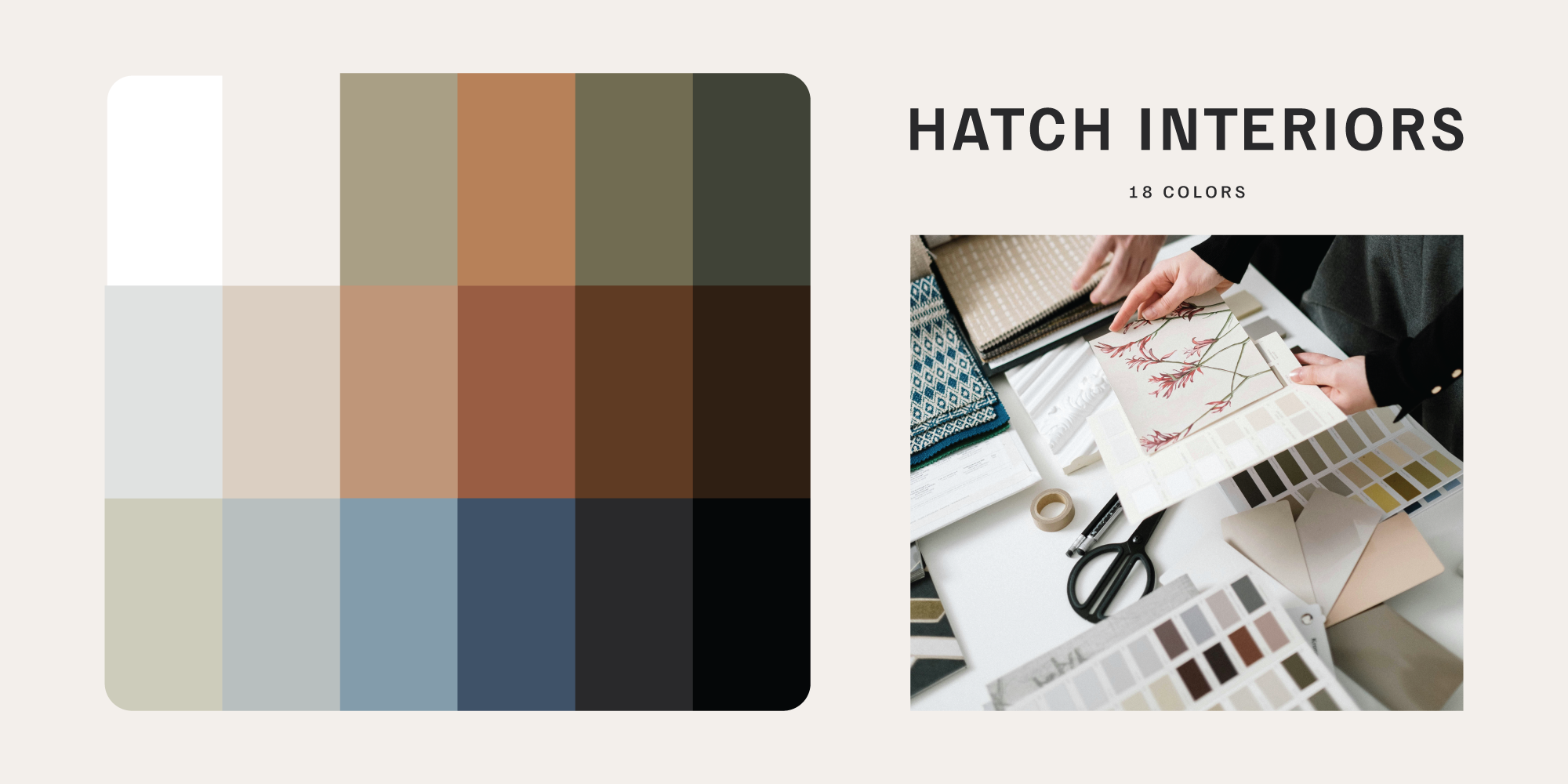
COLOR PALETTE
A useful brand palette needs to do more than provide one main color and a few supporting shades.
It should account for hierarchy, contrast, accessibility, and real-world use. That may include primary colors, secondary colors, neutrals, and a few accents, along with guidance for how each one should be used.
Some colors work beautifully as backgrounds but are difficult to read as text. Others may look great on a screen but reproduce poorly in print. Packaging, signage, websites, and social media all create different design needs.
A thoughtful palette gives the brand enough flexibility to stay visually interesting without slowly becoming inconsistent.
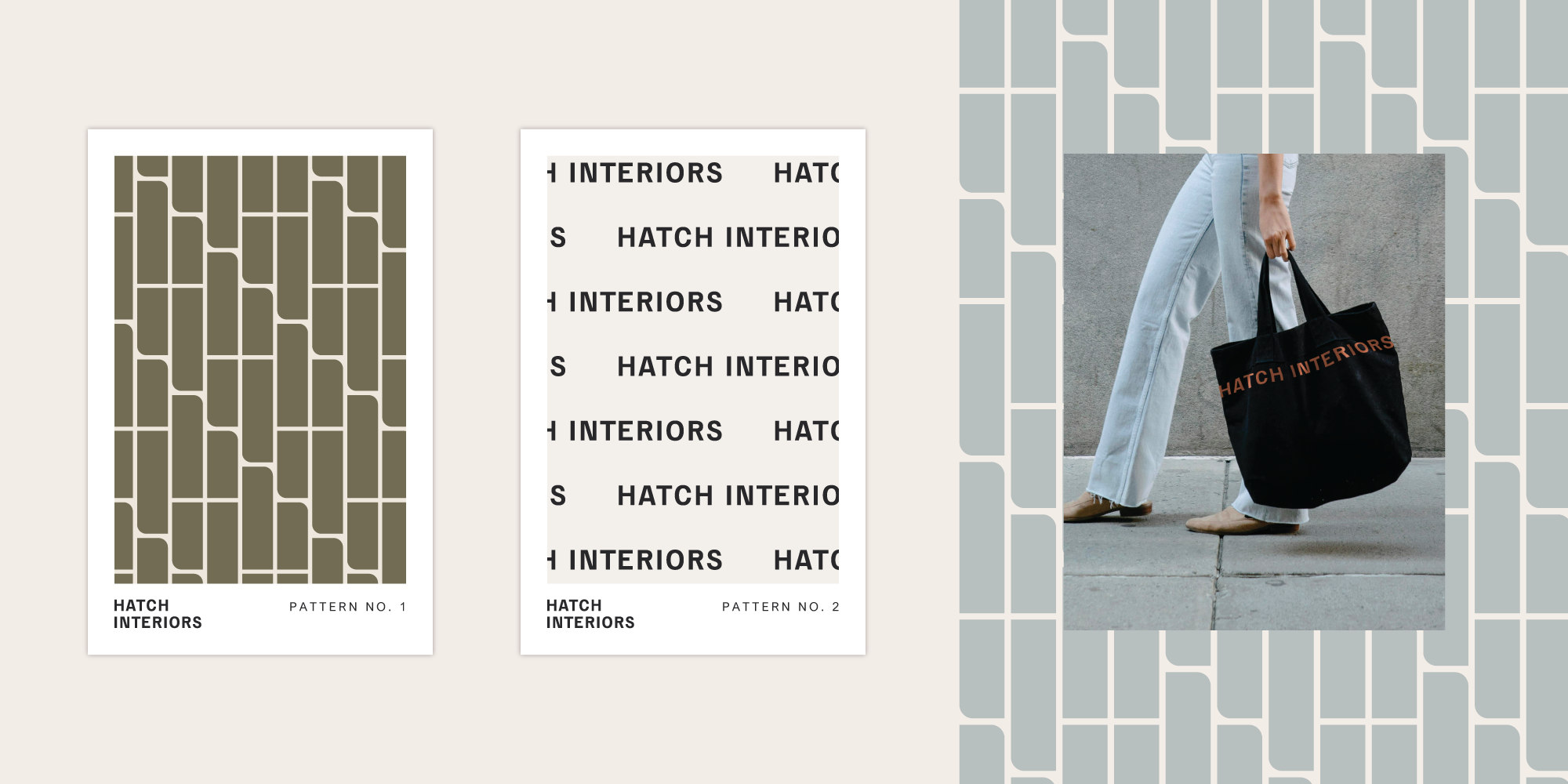
PATTERNS, GRAPHICS, AND SUPPORTING ELEMENTS
The strongest brands are recognizable even when the logo is nowhere to be found.
Patterns, custom icons, illustrations, textures, frames, shapes, line work, and other graphic elements all help create a distinct visual language.
A pattern might appear across packaging. A specific border treatment could carry through social graphics. A set of custom icons may help unify the website. Over time, these details become familiar and recognizable to the audience.
They also give designers more to work with, which keeps every piece of marketing from becoming a logo placed over a photograph.
MESSAGING AND BRAND VOICE
Your brand is not only what people see. It is also what they hear.
Messaging can include your positioning, value proposition, tagline, key talking points, and the language you use to explain your services or products. Brand voice guides how all of that should sound.
Some brands are direct and confident. Others are warm, conversational, reassuring, playful, or slightly irreverent. The exact tone will change depending on the audience and platform, but it should still feel like it is coming from the same company.
Without messaging guidance, a brand may look polished while sounding completely different everywhere it shows up. The website feels formal, the social content feels overly casual, and sales materials rely on generic language that could belong to anyone.
Strong messaging creates a clearer connection between the way the brand looks and the way it communicates.
What A Complete Brand Identity Makes Easier
A strong identity does more than make your business look polished. It makes everyday marketing and design decisions easier.
Website design moves faster because the colors, fonts, imagery, and overall direction are already established. Packaging feels like a natural extension of the brand instead of a completely separate project. Social content becomes easier to create because there are recognizable tools, treatments, and templates to work with.
The same applies to proposals, presentations, email campaigns, advertisements, signage, print materials, and event collateral.
Instead of reinventing the brand every time something new needs to be created, your team can focus on the actual message, campaign, or customer experience.
A strong system also makes it easier to recognize when an idea does not fit. New opportunities, partnerships, campaigns, and design concepts can be evaluated against the larger strategy instead of relying only on personal preference.
Most importantly, consistency builds trust.
When someone sees the same level of thought and intention across your website, packaging, social media, and sales process, your business feels more established. It signals that you understand who you are, pay attention to the details, and are capable of delivering a thoughtful experience.
Your Brand Is A System, Not A Single File
A logo gives your business a recognizable mark. A brand identity gives it a full language.
It provides the strategy, tools, and direction needed to communicate clearly wherever your audience encounters you. It helps your marketing feel more connected, gives your team more confidence, and makes the business easier to recognize and trust.
As your company grows, your brand has to do more than identify you. It needs to help people understand who you are, what you offer, what makes you different, and why they should choose you.
At Maker + Made, we build complete brand identity systems designed to work across websites, packaging, physical spaces, campaigns, and ongoing marketing. Whether you are creating a brand from the beginning or replacing one your business has outgrown, the goal is to create something that feels like you, works for your business, and is ready to grow with it.
If you’re ready to have a complete brand identity system, get in touch with our team for a consultation. It’s a no-pressure way to find out more about the services that help your business run smoothly.
